
AGRIFOODV – GLOBAL AGRIFOOD VALUE CHAIN BUILDER AND INVESTOR
Vietnam has the advantages to grow agricultural products. AgrifoodV builds the systems that turn those advantages into food for the world.
We connect the world’s future demand with Vietnam’s distinctive advantages, then design, organize and invest in the entire value chain to bring Vietnamese products to tables worldwide.
Mission, vision, philosophy
MISSION
Bringing Vietnam’s Produce to the World’s Table
By connecting the world’s future demand with Vietnam’s distinctive advantages, then designing, organizing and investing in the entire value chain: market, processing plant and raw-material growing areas.
VISION
A global agrifood value chain builder and investor, rooted in Vietnam
Where Vietnam’s distinctive advantages are organized into value chains that meet international standards and are a regular presence on the world’s tables.
PHILOSOPHY
Start at the table, work back to the field
A natural advantage is not yet value. Agricultural products hold lasting value only when they pass through a system designed for the final consumer.
This philosophy translates into three principles:
- Demand first, production second. Every value chain starts with one question: what will the world need, to what standard, at what price. Only then do we decide on the plant and the raw-material growing areas.
- Systems over opportunities. A good shipment is an opportunity; a chain that runs reliably from growing area to table is a capability. We design, organize and co-invest so that the chain runs for the long term.
- Distinctive advantages at the core. We select products in which Vietnam has hard-to-replace advantages in climate, varieties, seasons and people, then raise them to the standards the market requires.
Who AgrifoodV is
AgrifoodV is a Vietnamese company operating in the agrifood sector. We build, organize and invest in agrifood value chains together with processors, investors and raw-material growing areas: from market intelligence and product strategy to plant design and growing-area development.
We do not sell a single, isolated link. We help clients choose the right position on the value chain, then organize the remaining links around that position.
The agrifood value curve
Along the global agrifood value chain, profit is not evenly distributed. Fiscal year 2025 results from leading companies in each link show a consistent shape: the two ends retain much of the value, while the middle retains very little.
Reference margins, fiscal year 2025: Corteva Seed segment 26.6% (operating EBITDA) · Yara 17.8% (EBITDA before special items) · SGS 16.0% (adjusted operating income) · USDA ERS: 57–82% of small family farms have an operating profit margin below 10% (2024 data) · Olam Agri 2.5% (EBIT) · SunOpta 4.9% · ADM Ag Services & Oilseeds 2.6% · Ingredion Texture & Healthful Solutions 16.9% (operating income) · Nestlé Zone Asia, Oceania and Africa 20.7% (UTOP; group-wide 16.1%) · NIQ 21.8% (adjusted EBITDA). Sources: company earnings releases and 2025 annual reports; USDA ERS EIB-299 (February 2026). Accounting measures are not fully comparable; the figures illustrate the relationship between business models and are not industry averages.
UPSTREAM · 16–27%
Knowledge and inputs
Seeds, nutrition, cultivation protocols, standards and product design. Whoever holds the intellectual property, technology and standards sets the price.
TROUGH · 2.5–4.9%
Commodities and processing
Farming, sourcing, pre-processing, contract processing and commodity trading. High revenue but thin margins; competition is on price and scale.
DOWNSTREAM · 17–22%
Solutions and markets
Functional ingredients, branded products, customer and market data. Hard to replace, and therefore able to retain value.
Most of Vietnam’s agricultural output still leaves the country at the bottom of the curve. Only 17–18% of fruit and vegetable output undergoes deep processing; in Taiwan the figure is around 80% (Center for WTO and International Trade – VCCI, 15 June 2026). That gap is the value Vietnam is leaving for others to capture.
Strategy: win at both ends, organize the middle efficiently
The middle cannot be abandoned, because that is where the farmers, the plants and the volume are. But the middle is profitable only when it is organized from both ends:
- Upstream: seeds, nutrition, growing areas and standards are selected to meet the requirements of the target market, not out of habit.
- Downstream: products, customers and markets are defined before building a plant or expanding acreage.
- In the middle: sourcing, pre-processing and processing are designed with the right capacity and the right technology, and linked through contracts and standards.
How we work: market-back planning
Choose the market first, the machines second.
STEP 1
Market
What products buyers in the target market need, to what standards, in what volumes, at what prices, and behind which barriers.
STEP 2
Processing plant
From market requirements, define the processing technology, capacity and quality procedures so the plant delivers exactly what buyers need.
STEP 3
Growing areas
From the plant’s needs, plan the raw-material growing areas: the right varieties, volumes and seasons, with growing-area codes and digital farm records for traceability.
Working forward, from the tree to the machine and only then looking for a buyer, is the familiar path that keeps agricultural products at the bottom of the curve.
Our advantages
Present in the markets
We work directly in many countries: meeting buyers, importers, plants and industry trade fairs on the ground, not just reading reports.
A broad network
Relationships with importers, distributors, processing technology providers, experts and industry bodies in the main export markets for Vietnamese agricultural products.
Accurate market intelligence
Every figure we provide can be traced to its primary source: company reports, statistical agencies, legal texts. Raw-material prices are tracked on a regular basis.
We understand both the plant and the field
Hands-on experience with processing technology to European standards and with organizing raw-material growing areas, so market advice always comes with a solution for production.
Specialized solutions along the value curve
UPSTREAM
Raw-material growing areas and varieties
Assessment and planning of growing areas; variety selection based on the quality requirements of the target market and the plant.
Cultivation and growing-area codes
Cultivation protocols, digital record-keeping, growing-area code dossiers and traceability that meet importing-country requirements.
Product design and standards
Defining the product, specifications and required certifications for each market before investment.
IN THE MIDDLE
Organizing sourcing and pre-processing
Linkage models, offtake contracts, reduction of post-harvest losses.
Processing plant design and upgrades
Selection of technology and capacity, line layout; preparation and appraisal of investment projects.
DOWNSTREAM
Deep processing and by-products
From fresh fruit to industrial ingredients: concentrates, quick-frozen products, functional ingredients; making use of peels, seeds and pulp residue.
Market intelligence and export strategy
Analysis of demand, prices, tariffs and technical barriers by market and by HS code.
Buyer connections
Introductions to importers, distributors and industrial customers that match your production capabilities.
Experts alongside us
Our experts and international partners
On every project, the Agrivi Vietnam team works with specialists from technology, market and research partners abroad. Here is what they say about working together.
The Agrivi Vietnam team

I founded Agrivi Vietnam on one principle: get the sequence right. Nearly 20 years and 14 lines built with Dutch, Italian and Israeli equipment have taught me that machines are rarely wrong; the sequence is. The target market sets the product specifications, the specifications set the technology, then come the site, the utilities and, last, the machines. With our partners we act as one point of contact, accountable for the whole line until the plant is selling. Choose the market first, then the machines.
Vietnam's agri-food sector has no shortage of raw materials or skilled people. What it lacks is technical knowledge that is written down, tested and handed back to the people who do the work. To me, R&D is a form of service: moving from the buyer's requirements to recipes, specifications and processes a plant can repeat every day. The five-volume series I edited and every AgrifoodV project keep one promise: put science into production so that value stays in Vietnam.
Many agri-food companies have the raw material, the plant and capable people, yet still fail to break through because no one is setting the strategy. I believe strategy comes down to three problems: name the buyer's real need, create the right product, then deliver that value to the right customers and get paid. At AgrifoodV, I am devoted to one task: helping business owners see where they are working backwards, choose the right direction before committing capital, and stay with them until the value chain earns sustainable revenue.
International partner experts

A good canning or bottling line starts with understanding the customer's product and market, not with a catalogue. We believe in technical competence, commitment and attention to detail, and that is also how AgrifoodV works. When customers work directly with experienced engineers, projects move faster and partnerships last longer.

Tropical fruit needs lines designed specifically for it, from pulp extraction and refining to aroma recovery, concentration and aseptic packing. Our three lines already operating in Vietnam show that each fruit and each market calls for a different configuration. We work with AgrifoodV so that Vietnamese plants start from the right product and the right market, and then choose the right technology.
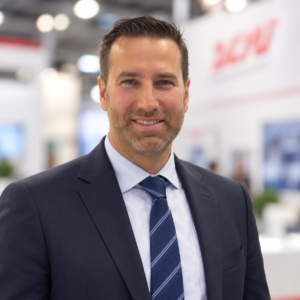
Today's juice and food producers need lines flexible enough to run different products and container formats, with hygiene designed in from the start. That only works when the brief is right: which product, for which market, at what capacity. AgrifoodV helps Vietnamese companies get that brief right, so we can engineer the right filling and seaming solution.

The value of export fruit is decided right after harvest: washing, treatment, grading and packing to each market's standard. Grading by weight, colour, defects and internal quality ensures only the best fruit goes into the box. Together with AgrifoodV, we bring experience from more than 30 countries to Vietnam's growing areas and packhouses.
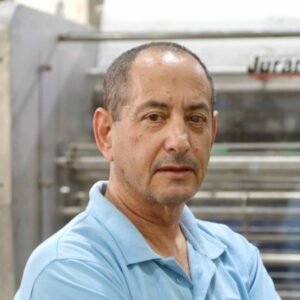
Success in a new market depends not only on technology, but on strong local partners and mutual trust. For Vietnam’s fresh and processed produce, food safety, hygiene and traceability are no longer optional; they are essential. We work with AgrifoodV to bring the right postharvest and processing technology to the right producers, so they can deliver consistent products their customers trust.
Who we work with
- Agricultural processors and exporters seeking to increase the value of their products.
- Investors preparing to build or acquire a processing plant.
- Cooperatives and companies with raw-material growing areas that need stable offtake.
- Local governments and development organizations that need a strategy for a sector.
Company information
AgrifoodV is a brand of Agrivi Vietnam Co., Ltd (Công ty TNHH Agrivi Việt Nam) · Tax ID: 0317882512
Address: The Verosa Park, 39 Street No. 10, Quarter 2, Long Truong Ward, Ho Chi Minh City
Phone: +84 938 613 408
Email: contact@agrifoodv.com
AgrifoodV is a brand of Agrivi Vietnam Co., Ltd, an independent Vietnamese company.
Where does your product sit on the curve?
Talk to us to define your market, your product and the path up the curve.